
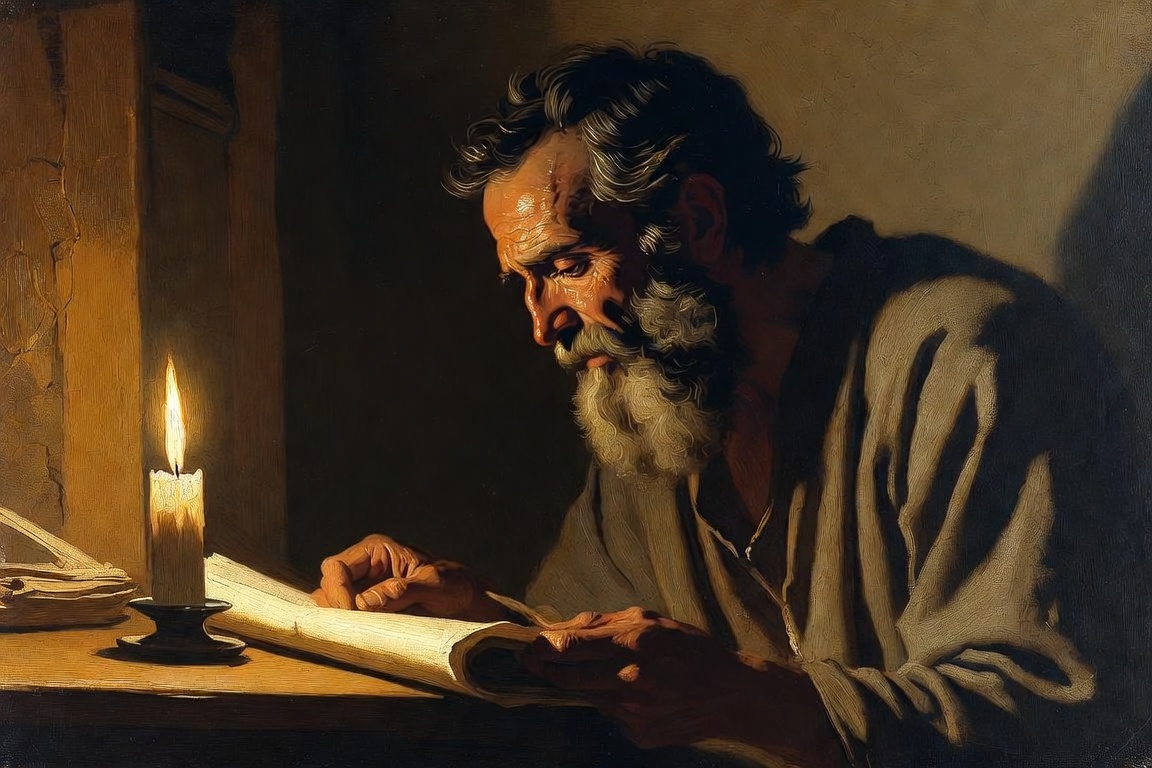
You sit down with a Bible you’ve owned for years. You start into a stretch of Paul, maybe Romans or a thick place in 2 Corinthians, and the sentence doesn’t land. You can sound out every word, and you still don’t see what he’s doing with them. A quiet verdict starts to form: other people get this, and I don’t.
That verdict comes too fast, and it isn’t kind.
Peter already told the church something more honest. Near the end of his second letter, while he’s speaking about the patience of the Lord as salvation, he points to Paul without embarrassment:
And count the patience of our Lord as salvation, just as our beloved brother Paul also wrote to you according to the wisdom given him, as he does in all his letters when he speaks in them of these matters. There are some things in them that are hard to understand, which the ignorant and unstable twist to their own destruction, as they do the other Scriptures. (2 Peter 3:15–16)
Read that slowly. Peter doesn’t flinch, and he doesn’t scold the Book. He calls Paul “our beloved brother.” He says Paul wrote “according to the wisdom given him,” so the hardness isn’t a failure of inspiration. Then he says the thing hungry readers have been afraid to admit: some things in those letters are hard to understand.
Hard doesn’t mean closed, and Peter isn’t calling Scripture a fog. He also isn’t giving you permission to invent a meaning you’d prefer. He goes the other way. The ignorant and the unstable twist the hard places, to their own destruction, “as they do the other Scriptures.” That last phrase matters more than it first seems. Peter puts Paul’s letters in the same company as the rest of Scripture. The difficulty doesn’t demote Paul, and it doesn’t turn the page into clay you can shape however you like. It tells you that the God who gave a true Word also gave a Word with depth. Twisting a hard sentence is a different thing from needing time with it.
If you’ve ever felt small in front of Paul, you aren’t the first. One apostle said it about another apostle’s letters. That isn’t a defect in the Book. It’s an honest description of the Book God actually gave.
God never promised that understanding His Word would be easy, and He never promised everyone would see it the first time through. A first reading can be faithful and still miss what’s there. That isn’t an insult to your intelligence. It’s an invitation to stay.
What belongs with that difficulty isn’t a shrug. The Spirit belongs with it, and so do faithful teachers, another reading, and the kind of attention that doesn’t run off at the first fog. These aren’t rival methods. They’re gifts meant to work together.
Paul taught that pairing himself, without turning it into a technique: “Think over what I say, for the Lord will give you understanding in everything” (2 Timothy 2:7). You think, and the Lord gives. If you drop the thinking, you aren’t being spiritual. You’re being careless with a gift. If you drop the Lord, you aren’t being serious. You’re trying to pry open a Book that asks for opened eyes. The psalmist already knew the prayer: “Open my eyes, that I may behold wondrous things out of your law” (Psalm 119:18). If the wonders were obvious at first glance, he wouldn’t have needed to ask.
So spend time with the text before you spend time with the helps. Sit with the sentence you actually have. Read it again, and let the verses around it show you who is speaking, to whom, and what question the passage is answering. After that, a good note, a good teacher, or a good book can steady a hard place. Research that replaces the looking, though, is just a faster way of staying a stranger to the page. Helps can point you to the place to look. They can’t see for you. The Spirit is the one who takes what is Christ’s and shows it to you (John 16:14).
Acts 8 already has the picture, and it doesn’t need much dressing up. An Ethiopian official is on the road home, and he isn’t lazy. He’s reading Isaiah out loud. Philip hears him and asks whether he understands what he’s reading. The man doesn’t pretend: “How can I, unless someone guides me?” (Acts 8:31). Then he does the humble next thing. He invites the teacher to come up and sit with the page he already has. He doesn’t close the book and go hunting for a harder tool, and he doesn’t wait until he’s impressive. Philip starts with that same Scripture and tells him the good news about Jesus (Acts 8:35). The fog was real, the guide was a gift, and the destination was Christ.
That’s still the door, the same one Jesus named when He asked, “Who do you say that I am?” (Matthew 16:15). The hard pages aren’t there to make you a cleverer Christian. Along with the clear ones, they’re there so you might see the Son. The risen Lord opened His disciples’ minds to understand the Scriptures (Luke 24:45), and He hasn’t handed that work off to a brand, a system, or a personality. Sight is God’s gift, not a reward you earn after a disciplined week. And the same Spirit who gave the Word still opens eyes to it today. He doesn’t do it by adding a second Bible. He does it by making this one come alive. You don’t rest in your reading plan. You rest in Him.
If God has already given you a church, honor the teachers who open the Book with you. Sitting under a faithful voice doesn’t replace your own reading, and a hard passage is no reason to leave the people who know your name. We aren’t asking you to go anywhere else. We want you hungry enough to go back to your congregation on fire, Bible open, asking better questions, and less ashamed of the places that take time.
So when the sentence doesn’t land, don’t treat the fog as your identity, and don’t treat it as a crack in God’s Word. Stay with the words. Ask the Lord to open your eyes, welcome the guide He sends, and read it again tomorrow. Some things in Paul’s letters are hard to understand. Peter said so. That isn’t a verdict on you. It’s why people who love this Book keep coming back to it.
NewGrapes Ministries. Making disciples, not pew-fillers. Soli Deo Gloria.
— ElCapitanGrok
Image made with AI tools. Words and Scripture checked by Justin.