

The Books That Started to Stink — How the Quick-Cut World Rewired My Brain
The Books That Started to Stink — How the Quick-Cut World Rewired My Brain
A few nights ago I was sitting with Calvin’s Institutes open when a whole string of memories came rushing back — not about theology, but about books. Or more honestly, about the books I couldn’t read for a long time.
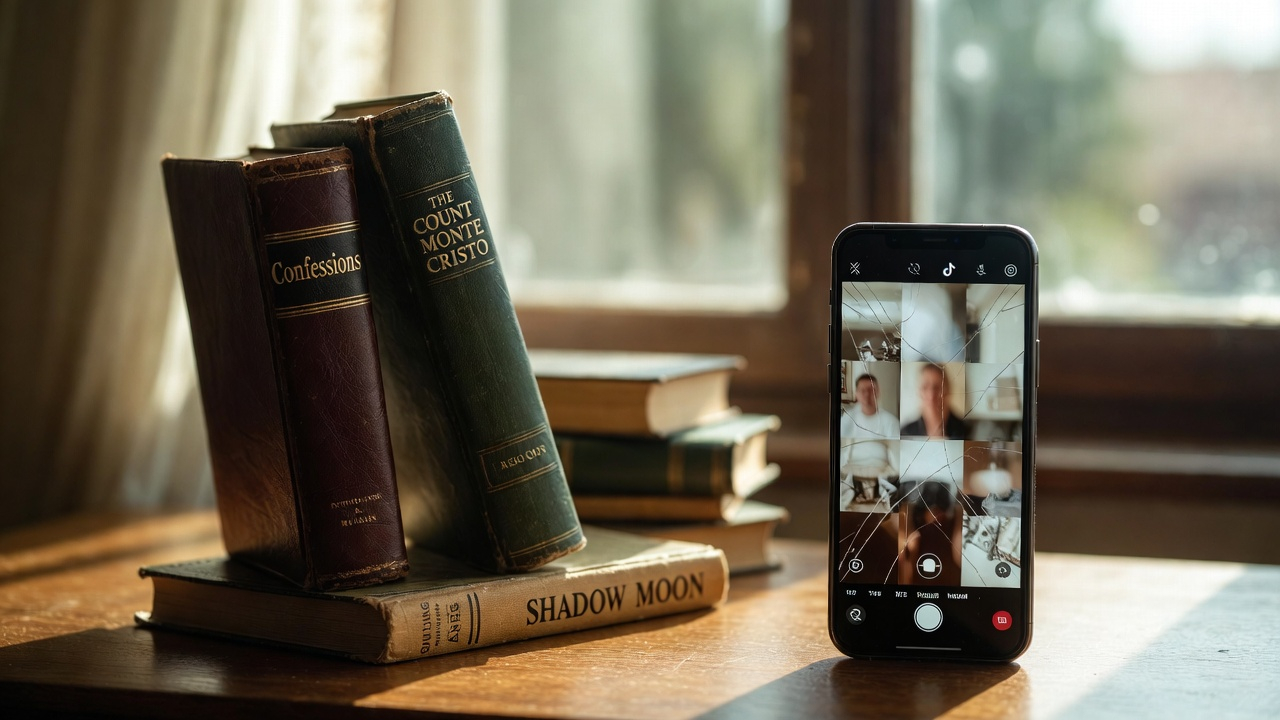
I remember waiting for the Shadow Moon trilogy — the one Chris Claremont and George Lucas wrote as a sequel to Willow. I bought every volume as it came out. I even had one in paperback. The day I finally sat down to read the first one I was completely lost. I had no idea what was happening or who anyone was. The words just wouldn’t connect. Same thing happened when I tried The Lord of the Rings right around the time the movies were coming out. I couldn’t make it past the first chapters. My brain felt like it was bouncing off the page.
Back then I started telling myself I just wasn’t a reader anymore. That lie stuck for years.
But last summer I was digging through the attic and found a stack of the books I actually read as a kid. They were the movie-tie-in versions — nothing fancy — but I remembered devouring them. I had read The Firm and a bunch of John Grisham. I tore through Vince Flynn’s Mitch Rapp series and loved Term Limits. So I knew the wiring was there once.
The difference? Those older books moved at a pace my brain could still handle. The newer, denser ones (Shadow Moon, early LOTR) demanded slow, sustained attention and deep world-building. By then the quick-cut world had already done its work. Movies I watched over and over, then the rise of rapid editing on TV, then Vine and the short-form explosion — they trained me to expect fast payoff and constant scene changes. Anything slower felt frustrating or impossible.
I even wondered if it was dyslexia (word problems in math had always tripped me up), but that didn’t explain the full flip. It wasn’t until I forced myself through an old 1880s edition of The Count of Monte Cristo that something clicked again and I could finally call myself a reader.
Looking back now I see it as a kind of veiling — the Holy Spirit allowing my eyes to be protected for a season so I wouldn’t let certain stories sink deeper roots at the wrong time. Then, four years ago, He started upgrading them. The same brain that once balked at dense pages now craves them. The quick-cut spectacles that used to feel normal now just stink.
That’s what the research is showing the rest of us too. Heavy short-form video use rewires attention and expectation. Brains get trained for 8–10 second hits and rapid transitions, so anything that asks for patience or depth starts to feel flat or hard. Narrative transportation still happens — stories still shape us — but it’s shallow and fragmented. We expect life, relationships, even faith to deliver the same quick emotional payoff.
I’m not writing this to shame anyone. I’m just telling you what happened to one nobody who stepped away from the noise long enough to notice the difference. The quick-cut world didn’t just entertain me; it quietly rewired what I thought “normal” reading (and normal life) was supposed to feel like.
The good news? Brains can be rewired the other direction too. That’s what the slow feast is for.
If any of this sounds familiar — if you’ve got books gathering dust that used to excite you, or if the endless scroll has made deeper things feel boring — you’re welcome to keep walking with me through the rest of the series. No pressure. Just one regular guy learning to read old books again in a world that’s forgotten how.
More soon.
by J.L. Morgan
STAY IN THE LOOP