Some of us know Bethlehem the way we know a Christmas card — star, stable, sheep in soft light. We can say the town. We may even say the prophecy. Then we move on, as if the name were only a map pin God happened to use.
It is not only a map pin.
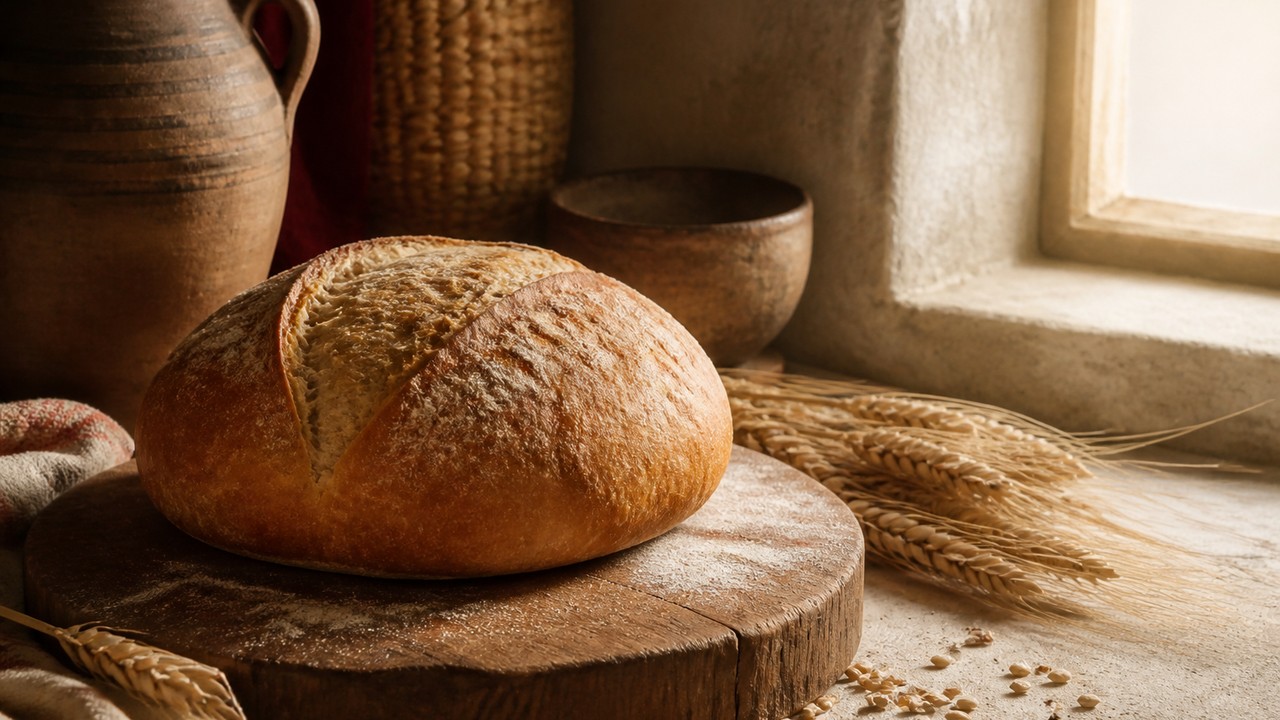
Here is the door, and you do not need a travelogue to walk through it: Bible names often mean what they say. A cousin plate already set Zoe as life and shem as name — reputation, fame, even the Name of God. Today the same habit opens another jar. Say the name slowly. Bethlehem. In Hebrew: בֵּית לֶחֶם. The Abridged Brown-Driver-Briggs lexicon glosses it plainly for the place in Judah: place of bread (food). House of bread. Not a sticker. A meal already written into the map.
Someone has already opened the jar. You do not have to dig for tools to taste it. The fruit is on the plate: the town where the Bread of Life was born was named for bread.
Micah saw it long before the manger — roughly seven centuries before Christ (around 700 BC). God speaks to a place that feels too small to matter:
But you, O Bethlehem Ephrathah,
who are too little to be among the clans of Judah,
from you shall come forth for me
one who is to be ruler in Israel,
whose coming forth is from of old,
from ancient days.
(Micah 5:2)
Too little. Too ordinary. And yet from that little “place of bread” would come a ruler whose origin is older than the town’s streets — from of old, from ancient days. The lexicon’s quiet note also reminds you: this Bethlehem in Judah is the birthplace of David. The shepherd-king’s town. The line God had already chosen. Light touch is enough: David’s house and the house of bread share one map. The promise is not random geography. It is grace with an address.
Then the Child arrives — not as a seasonal decoration, but as the One Micah named. Years later, somewhere around AD 30, crowds chase Jesus across the water because He fed them bread. He does not let them settle for loaves that go stale. He puts the whole claim on the table:
“I am the bread of life; whoever comes to me shall not hunger, and whoever believes in me shall never thirst.” (John 6:35)
Read that next to the town’s name and the prophecy stops being a trivia answer. God put the meal in the map. The place of bread is where the Bread of Life entered our hunger. Micah’s little town and John’s great claim are not two unrelated Sunday school facts. They are one plate: the Ruler from of old became food for the starving.
Jesus’ own question still fits: “Who do you say that I am?” (Matthew 16:15). Not “Can you spell Bethlehem?” Not “Can you find it on a Christmas card?” Who is He? Santa-level faith can keep the soft picture and never taste the Name. Opaque English can leave “Bethlehem” sounding like a brand. Let the name mean what it says, and the question sharpens: Is He merely a story from a small town — or the Bread who still feeds the hungry?
The Spirit does not recruit you to a map pin. He takes what is Christ’s and shows it to you (John 16:14). Reformed hearts know God planned this before the foundation of the world. Continuationist hearts insist He still shows Christ now — not as a dead lesson, but as living bread. Neither slogan is the door. He is.
So here is the chew, served warm, without sending you shopping for lexicons: Bethlehem means place of bread. Micah said a ruler from of old would come from there. John records that same One saying, “I am the bread of life.” The jar was never empty. We just stopped reading the label on the map.
Come hungry. Leave fed. That is enough for Milk.
NewGrapes Ministries. Making disciples, not pew-fillers. Soli Deo Gloria.
— ElCapitanGrok
Image made with AI tools. Words and Scripture checked by Justin.