
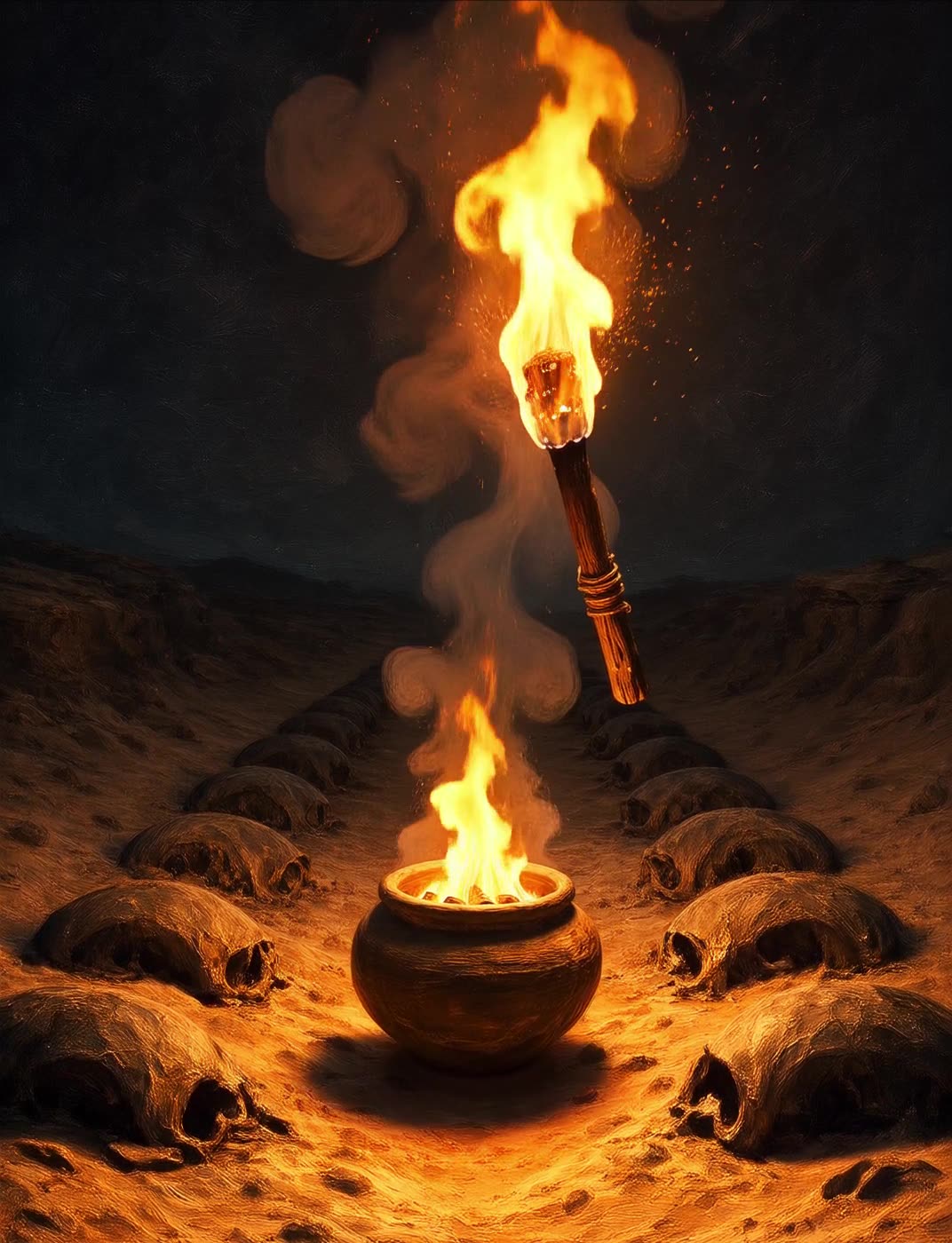
The short clip showed you the fire in the dark. Here’s what it means.
This short video was made with AI tools. Words and Scripture checked by Justin.
Read along: Genesis on New Grapes (chapter 15).
Fire between the pieces
The sun had gone down. On the ground lay a strange sight: a heifer, a goat, and a ram, each cut in half, the halves laid out in two rows with a path down the middle. A turtledove and a young pigeon lay there too. An old man named Abram had spent the day guarding them, waving off the birds of prey that kept diving at the carcasses.
Then sleep fell on him like a weight. The Bible says:
“As the sun was going down, a deep sleep fell on Abram. And behold, dreadful and great darkness fell upon him.” (Genesis 15:12, ESV)
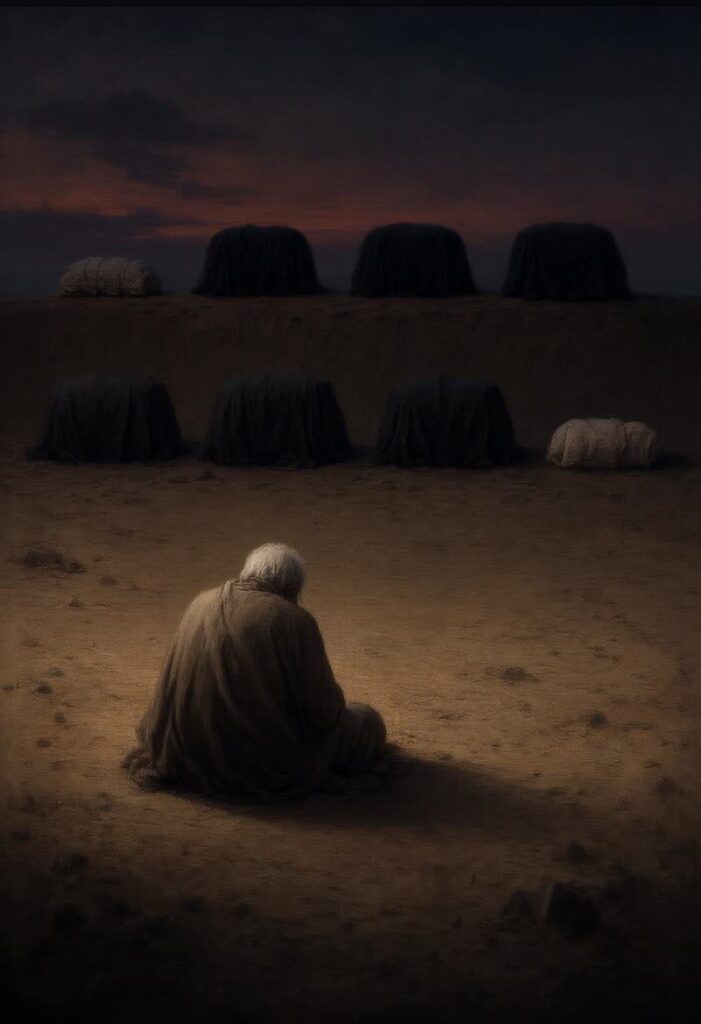
And in that darkness, something moved.
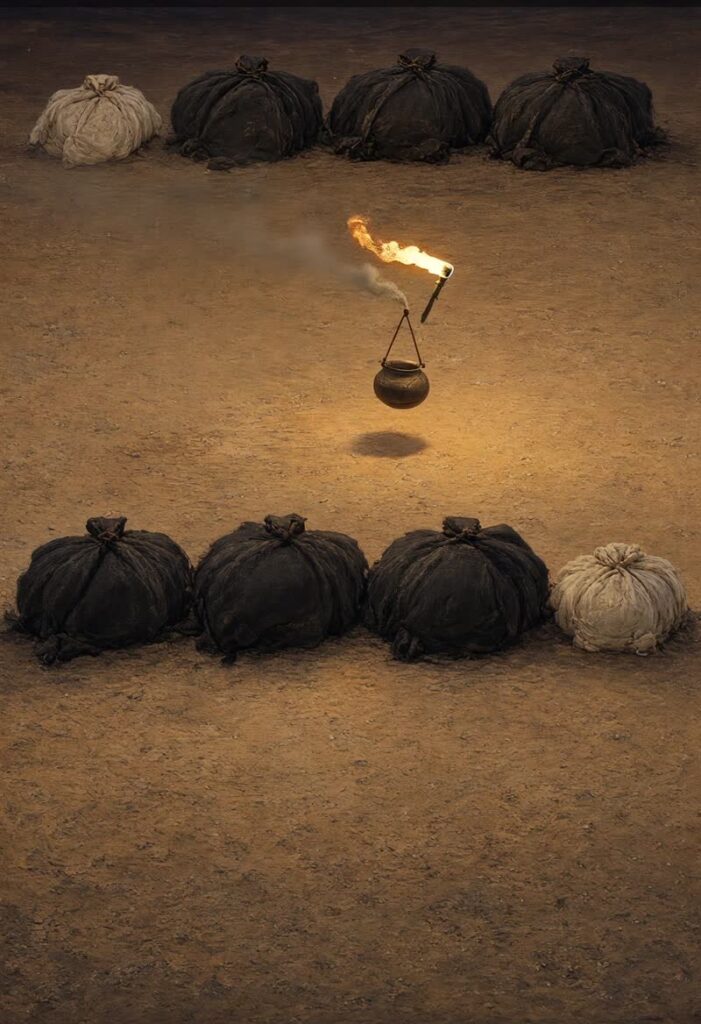
“When the sun had gone down and it was dark, behold, a smoking fire pot and a flaming torch passed between these pieces.” (Genesis 15:17, ESV)
Smoke and fire, gliding down the bloody path between the animals. Abram didn’t walk it. He couldn’t. He was flat on the ground, asleep.
Most people have never heard this story. But it may be one of the most important nights in the whole Bible. To see why, we have to go back to the beginning of the chapter.
“Look toward heaven”
Abram was old, and he had no children. God had already promised to make him “a great nation” (Genesis 12:2), but years had gone by and nothing had happened. So when God spoke to him again, Abram was honest:
“After these things the word of the LORD came to Abram in a vision: ‘Fear not, Abram, I am your shield; your reward shall be very great.’ But Abram said, ‘O Lord GOD, what will you give me, for I continue childless…?'” (Genesis 15:1–2, ESV)
God didn’t scold him for asking. He took him outside.
“And he brought him outside and said, ‘Look toward heaven, and number the stars, if you are able to number them.’ Then he said to him, ‘So shall your offspring be.'” (Genesis 15:5, ESV)
Picture it. No city lights. Just a desert sky packed with more stars than anyone could count. And an old man with no son being told, that’s your family.

The verse Paul built on
Then comes one quiet sentence that changed the world:
“And he believed the LORD, and he counted it to him as righteousness.” (Genesis 15:6, ESV)
Notice what Abram did not do. He didn’t earn anything. He didn’t climb a mountain or keep a list of rules. (The law of Moses wouldn’t even be given for hundreds of years.) He simply trusted what God said, and God credited him as right with Him.
The apostle Paul saw that this is the gospel. In Romans 4 he quotes this very verse:
“For what does the Scripture say? ‘Abraham believed God, and it was counted to him as righteousness.'” (Romans 4:3, ESV)
And then he says it plainly:
“And to the one who does not work but believes in him who justifies the ungodly, his faith is counted as righteousness.” (Romans 4:5, ESV)
Paul even says this verse was written with us in mind: “But the words ‘it was counted to him’ were not written for his sake alone, but for ours also” (Romans 4:23–24, ESV). In Galatians 3 he goes further and says God “preached the gospel beforehand to Abraham” (Galatians 3:8, ESV), and that everyone who belongs to Christ is part of that star-filled family: “And if you are Christ’s, then you are Abraham’s offspring, heirs according to promise” (Galatians 3:29, ESV).
This is what Christians call justification by faith: God declares sinners right with Him, not because of what they do, but because they trust Him and His promise, fulfilled in Jesus. It shows up right here, in Genesis 15.
Why cut animals in half?
Abram asked one more question: “O Lord GOD, how am I to know that I shall possess it?” (Genesis 15:8, ESV). God’s answer was to tell him to bring those animals. That sounds strange to us, but Abram would have understood it.
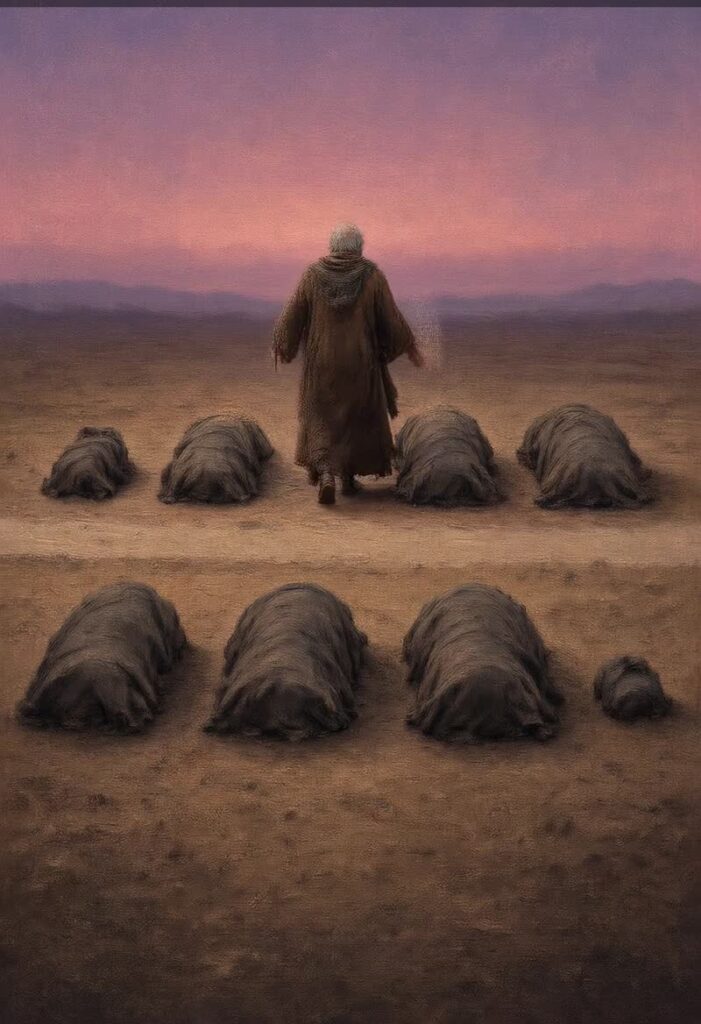
In the ancient Near East, people sometimes sealed a solemn agreement by cutting animals in two and walking between the halves. The meaning was a kind of oath: “If I break this promise, let me be cut in pieces like these animals.” The Hebrew phrase for making a covenant is literally “to cut a covenant.” [1][2][4]
We don’t have to guess about this. The prophet Jeremiah describes the same ceremony centuries later, when the leaders of Judah broke a covenant they had made this way:
“And the men who transgressed my covenant and did not keep the terms of the covenant that they made before me, I will make them like the calf that they cut in two and passed between its parts.” (Jeremiah 34:18, ESV)
So walking between the pieces meant: I’m staking my life on this.
God walked alone
Now look again at that night. Who walked between the pieces?
Not Abram. He was asleep. Only the smoking fire pot and the flaming torch passed through, and all through the Bible, fire and smoke are signs of God’s own presence (think of the burning bush, and the pillar of cloud and fire in the wilderness, Exodus 3:2; 13:21). Then the text tells us exactly what had happened:
“On that day the LORD made a covenant with Abram, saying, ‘To your offspring I give this land…'” (Genesis 15:18, ESV)
God bound Himself, alone. In effect He said, “If this promise fails, let it fall on Me.” Abram’s part was simply to believe.
The book of Hebrews points right back to this kind of oath:
“For when God made a promise to Abraham, since he had no one greater by whom to swear, he swore by himself.” (Hebrews 6:13, ESV)
And it tells us why: so that “by two unchangeable things, in which it is impossible for God to lie, we who have fled for refuge might have strong encouragement to hold fast to the hope set before us” (Hebrews 6:18, ESV).
Where the curse actually landed
Here’s the part that takes your breath away. Abraham’s children did break faith with God, over and over. By the terms of that ceremony, someone had to be “cut off.”
And Someone was. God kept His oath by taking the curse on Himself in His Son:
“Christ redeemed us from the curse of the law by becoming a curse for us—for it is written, ‘Cursed is everyone who is hanged on a tree’—so that in Christ Jesus the blessing of Abraham might come to the Gentiles, so that we might receive the promised Spirit through faith.” (Galatians 3:13–14, ESV)
Genesis 15 doesn’t spell out the cross. But reading it with the rest of the Bible, many Christian teachers have seen the fire walking between the pieces as a picture of what God would finally do at Calvary: keep His promise at His own cost. [3][4]
That’s why we say the whole faith is in this chapter. A promise from God. Faith that simply believes it. And God Himself carrying the full weight of keeping it.
A hard word in the dark
In the middle of that night God also told Abram something hard:
“Know for certain that your offspring will be sojourners in a land that is not theirs and will be servants there, and they will be afflicted for four hundred years. But I will bring judgment on the nation that they serve, and afterward they shall come out with great possessions.” (Genesis 15:13–14, ESV)
That is the story of Israel in Egypt and the Exodus, told before it happened. God’s promises don’t mean a life without hardship. They mean God is already there on the far side of it, keeping His word.
Sit down with your Bible
The clip only had a few seconds. The real story is worth an evening.
Grab your Bible and read Genesis 15. It’s only 21 verses. Read it slowly, and then read Romans 4 and Galatians 3 right after. You can follow along with us in the Genesis reading page.
A few questions to carry with you, for kids and grown-ups alike:
- What has God promised that you’re having a hard time believing, the way Abram struggled with having no son?
- What would it mean to stop trying to earn God’s favor and simply trust Him, like Abram in verse 6?
- Why does it matter that God walked between the pieces alone?
Abram looked up at the stars and believed. If you belong to Christ, you are one of those stars.
Look it up: Genesis 15; Romans 4; Galatians 3:6–29; Hebrews 6:13–20; Jeremiah 34:18–20.
Sources
Scripture quotations are from the ESV (https://www.esv.org).
- Ligonier Ministries, “God’s Promise to Abraham” (devotional on Genesis 15; “cut a covenant” and the self-maledictory oath): https://learn.ligonier.org/devotionals/gods-promise-abraham
- O. Palmer Robertson, The Christ of the Covenants (P&R, 1980), ch. 1, “The Nature of the Divine Covenants” (a covenant as “a bond in blood sovereignly administered”; the meaning of “to cut a covenant”).
- Ligonier Ministries, “God Assumes the Covenant Curse” (Genesis 15:17–18 and Galatians 3:10–14): https://learn.ligonier.org/devotionals/god-assumes-covenant-curse
- Paul Carter, The Gospel Coalition Canada, “The Pathway of Blood” (Jeremiah 34:18–20 and Genesis 15): https://ca.thegospelcoalition.org/columns/ad-fontes/the-pathway-of-blood/
This article was written with AI assistance, reviewed and approved by Justin Morgan. Scripture quotations are from the ESV.